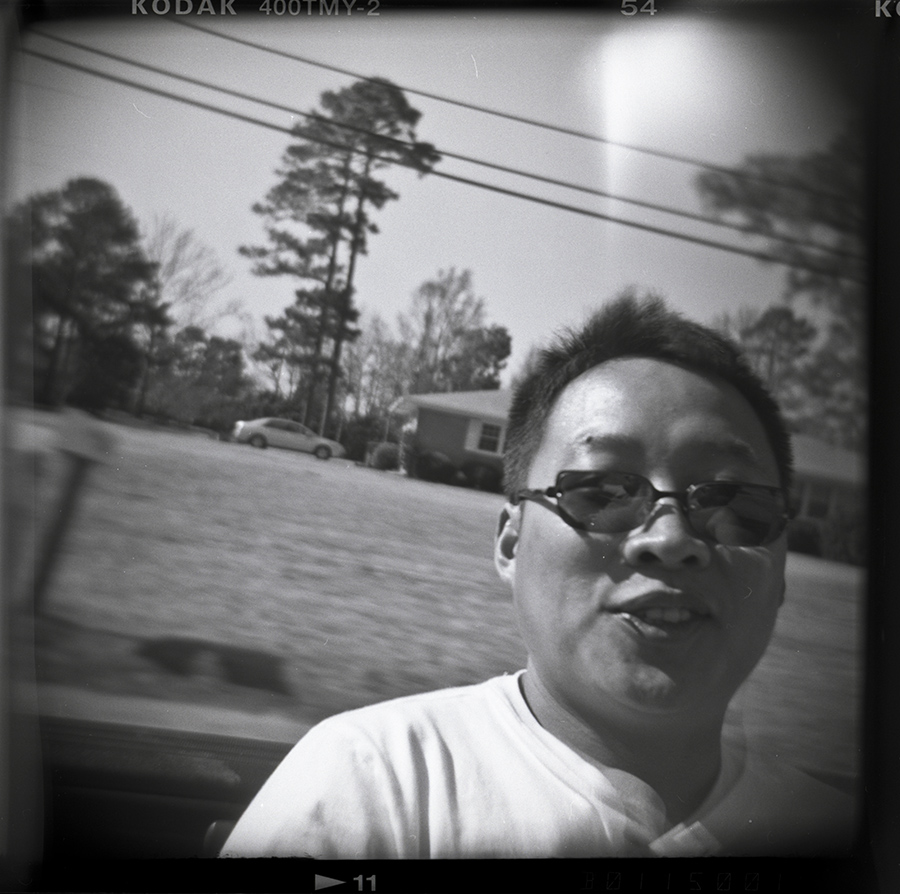
A Holga is also good for riding around in the back of a truck. If you drop it, you're only out $30, and it may still even be useable. No electronics to break.
-llg
A Holga is also good for riding around in the back of a truck. If you drop it, you're only out $30, and it may still even be useable. No electronics to break.
-llg

It was fresh, when I pressed the shutter on this exposure, two years ago. Now it's a decorative candle housing.
-llg

You gotta love them midwest girls. Good thing they go for us NC country boys, right Lucas?
-llg

This one was done with the Holga, with the edge matte still inside, as you can see from the hard edges of the overlapped exposures. Obviously I hadn't mastered the rotation degree either at this point.
-llg

Another funky Diana panoramic. You can see the hard edges of the overlaps that result from leaving the plastic matte box inside the camera. When removed, the edges become a bit more soft, especially in the Holga.
-llg
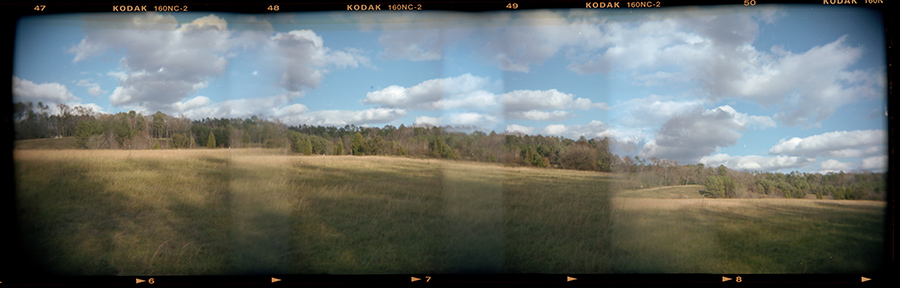
By extension of the double exposure technique, you can create interesting panoramic shots with Holgas and Dianas, simply by only advancing the film part of the way to the next indicated exposure. Without some testing and measuring, it's a bit of guesswork, and since they are rangefinders (small secondary lens is used to approximate the main len's view, like old point-and-shoots), there's more guessing as to how far to rotate. I've never got one perfect; most times there's frame that's way off like this one. Still, I like their charm.
-llg

Another great thing about these cheap plastic cameras is the ease of double exposures. Since you have to manually advance the film, and since there's nothing to prevent you from taking another picture before you do, they sometimes happen by accident ("Did I wind this film already? Might as well take another."). Sometimes it's a happy accident. Other times, not so much. This one was not an accident. I had the wife stand in front of a softbox, which I triggered via a Pocketwizard on the Holga. (The guys at Southeastern Camera over in Carrboro postulated that the fabric of space and time might rip if I put such an expensive piece of equipment on something as cheap as the Holga...but so far so good.) I fired one shot, then immediately rotated the camera upside down and shot another. Turned out better than I could have hoped, but with the Holga, it's always an experiment, a gamble.
-llg

Might be my favorite personal Holga shot ever. Wrightsville Beach, Novemeber 2009. -llg

I prefer the British pronounciation here: Ad-VER-tiz-ment. Another great thing to do with plastic cameras is to shoot film that is meant to be processed in one particular chemical process and ask to have processed in another at the lab, which is called Cross-Processing, or X-Pro. This makes the colors do weird things, but the plastic lens isn't exaclty color-accurate to begin with, so why not? With the Holga and Diana, it's all about measured experimentation anyway. Often this is a good option if you get your hands on some expired film, which in theory has lost some of it's color accuracy. On eBay I picked up a plethora of expired E-6 film, which processes in E-6 chemistry and creates a postive film transparency, like slide film. To cross-process, I take it to the lab and just tell them to process it in normal color negative chemistry, C-41 (I don't say all the dorky numbers, I just tell them cross-process it). It comes out as a funky-colored negative. And there is much rejoicing.
-llg

One of the telltale characteristics of the Holga/Diana/Plastic camera is the vignetted edges. Cheap plastic lenses don't make for perfect edge to edge illumination on the film plane, and the fact that the negative is 6 cm x 6 cm means that the image the lens creates really has to be significantly larger than a 35mm film plane. To accentuate this effect, I remove the included matte frames from my Holga and Diana. These plastic squares crop the image area ever so slightly, which gives the final photo a nice clean edge on the negative, though the lens vignetting is still usually visable. Removing them allows the light to pass over more of the film, and creates a somewhat more rounded exposure. The falloff of light at the edges is no longer cropped short, and the vignette is more pronounced. One thing I also do is apply two strips of black electrical tape to the two exposed plastic joints inside the camera where the matte frames would sit. Because the film slips along these sharpish edges, it could stratch without the tape there.
-llg
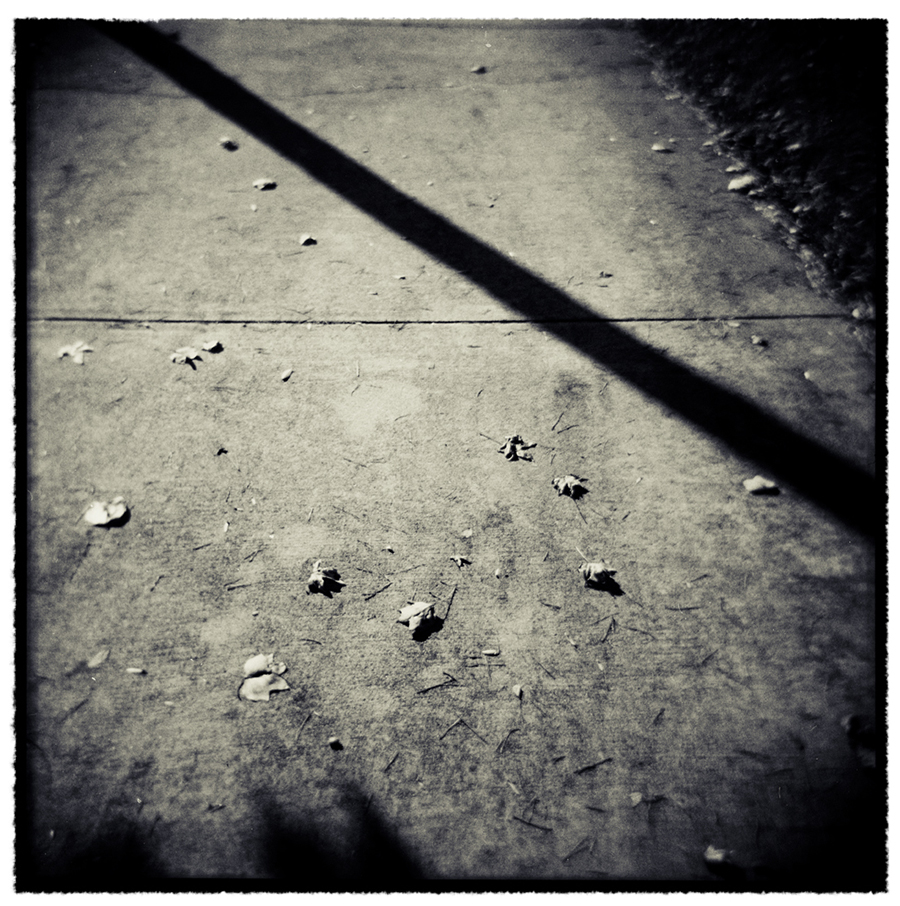

Color film works great in the Holga or Diana as well. I find that it takes a bit more post-processing to look right though. I suppose you can set your film scanner to do everything automatically, and that might fix the blue color cast that results when the image is reversed from the orangish color of the negative, but I've never liked automatic. So I take the bluish image into photoshop and adjust the curves a bit, punch the contrast. Even film needs the computer these days.
-llg
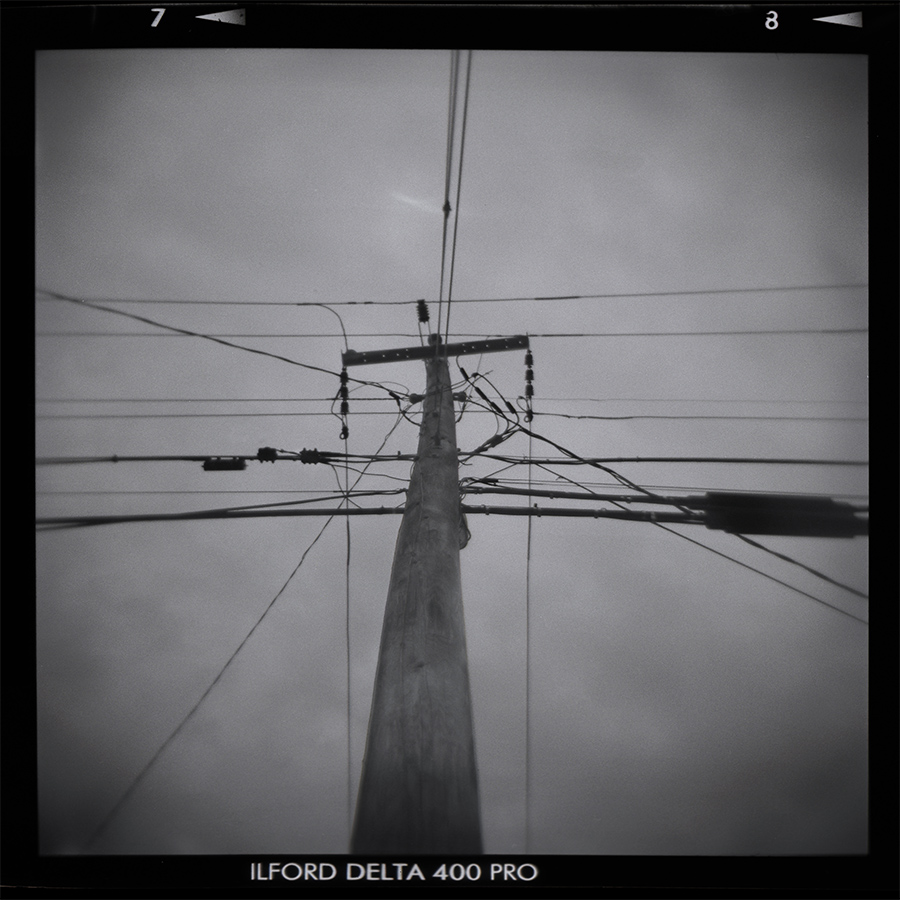

Holga shot from down in Atlanta. Contrasted in color and content with tomorrow's post, made a nice two-part wall piece for my mom. -llg

198/365: Holga and Diana.
Well folks, I've been themeless, or nearly so, for a bit now. The next month, starting tomorrow, will be a month of a tool-based theme, the tool(s) being the above cameras, the Holga and Diana, King and Queen of Plastic Photography. Plastic body, plastic lens, gaffer's tape all holding parts together; you've never had so much fun for $30. These cameras have a history all their own, and if you find them intriguing, there's lots of content online that can tell you all about it. If you aren't familiar with them, you may find the imagery familiar: nowadays everyone has the toy camera simulators on their iPhones, "Hipstamatic" being one I remember by name, but there are countless others, all designed to simulate the esoteric imagery that these quirky cameras are known for. Some of them do a pretty good job too, I mean, you don't have to ENHANCE the image so much as DEGRADE it a bit, add a Polaroid or film rebate border, heavy edge blur and vignette, garish colors and contrast, and whammo. Holga. Well, that's all good, and if I had an iPhone, you know I'd be using it. But this here is the real deal, FILM, baby, MEDIUM FORMAT film, and it comes with a whole set of quirks that instant digital technology does not: namely, lots of wasted film. (Just kidding. Sort of.)
These cameras have enjoyed mulitple revivals over their history, and for now, they are still popular enough to be marketed and sold directly to the hipsters via Urban Outfitters and the Lomographic Society, or whatever it's called. These modern packages are pretty sweet, they come with various art books and accessories like fisheye lens attachments, but seriously, $75 for a plastic camera? Find the cheaper, less flashy Holga boxes at good camera stores, or online (even Amazon), save cash on the camera, and then spend the rest on that expensive medium format film.
All the images coming for the next month are scanned pieces of film, processed in the 'digital darkroom', Photoshop. For a lot of us, nothing is fully analog any more, though I could develop the film and print the black and whites if I REALLY wanted to. Which I don't.
I've preposted all the shots, and they'll be self-published daily, as I will be off the internet and grid for the next month. I'll get to any comments or emails when I return. Since I won't be posting links to these via Twitter or Facebook, if any of you feel like sharing the shots you like with your Followers/Friends, I would be internally grateful and in your debt. Thanks to all of you, see you in a month!
-llg

Not sure what the ol' Trickster did this time, but it looks like he might be going away for awhile. Somehow I doubt it was a simple traffic violation. Well, Coyote, I guess I'll look for ya when you get out, ya damn criminal.
-llg
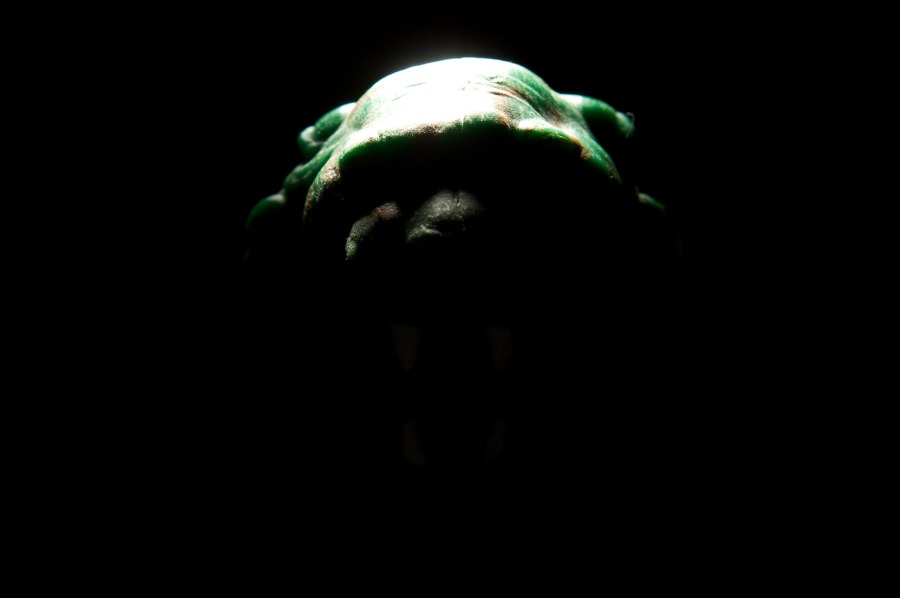
Looks more like an orc or something. Would I ride upon him? Only if I had the diseased-looking body of He-Man.
-llg

I want a sweet old car like this someday.
-llg

Not too long ago, saw this little fellow in my backyard. Cute bugger, in that 'I'll chew yer face off' kinda way.
-llg
 193/365: Summer Garden.
Plenty of pesto already made in the freezer, and look how much basil we still have to grind (Bri's watering it). Delicata Squash, tomatoes, cukes and carrots, black beans and basil. That's about all you can see in this picture, but trust me, there's more. It's been doing really well this year, in fact we have a tomato to rival last year's monstrosity...wanna see? Hit the jump:
That's last year's. Big 'un.
Too bad we're leaving town in less than a week. Guess the neighbors will be enjoying those tomatoes.
-llg


