60/365: Heat.60/365: Heat.

I'm still floating in limbo on my current theme/assignment for the 365. Been busy, busy, shooting all weekend and today for a client. Today during a break I saw a convoy of firetrucks headed toward a nearby plume of black smoke. I decided to head over and take a gander.

The house went up quick, but the person inside got out unharmed. By the time I got there, the flames were just about dead, but the air was thick with smoke and people had gathered thickly. I couldn't get a good angle for a shot, and was about to head out, but one of the neighbors saw me and said the view from his next door backyard was much better, and I could and should come over and see. Of course I did, and shot for about thirty minutes as the fire fighters finished their job. I even talked to the owner of the house for a few minutes. He rents it out, and told me he didn't care that it had gone up; he was just glad that no one was hurt. The cause of the fire was unknown. -llg


59/365: Smokey Pits

59/365: Smokey Pits.

Another long day of client shooting. Not too bad, actually; I was able to get a nap in mid-day. Had some white seamless video work at then end of the day, this shot was done with all hot lights, omnis and totas, and big 1000 watt softbox. Had to wear a monkey suit for the gig.  Composited in some smoke trails from an old shoot for laughs.

58/365: Moon Unit58/365: Moon Unit

I have to forfeit another random shot today, nothing that required much thought. Long day, longer day tomorrow, client shooting. But did you see that moon? It was brighter than a country girl's hiney.

-llg

57/365: A Bunch of Horseshit.57/365: A Bunch of Horseshit.

I've been looking at a lot of 'lifestyle' photography lately, which is, as far as I can gather, a combination of documentary and fashion photography. Instead of putting the gorgeous people in studio settings, you take them outside and let them frolic around, or maybe make them play bingo inside a Swiss chalet. Make sure they wear comfortable but fashionable clothes, and it's ok if the clothes don't quite match the activity. Let them hold a surfboard or a golf club, even if they've never touched either before. 'Lifestyle' is as good a name as any; the images make you want to live like them, and frolic with them in their wizardly perfectness.

Thing is, I love the way the photos look. There's some common elements: a lot of natural backlight (usually a no-no), interesting colors, dynamic activity, flare, vignetting, etc. It looks good enough for me to want to try out myself.

I may not have any gorgeous models willing to pose with guitars (that they can't play) in feather hats and underwear and boots (that they don't own) on wooden benches near the beach (that they've been paid to fly to), but I do have a gorgeous wife that has a real garden and a real pitchfork which she routinely wields without a camera around, turning real horseshit into that garden for the spring plantings. Now that's some REAL lifestyle shit man. I still really like the style though, so I gotta give props where they are due.

This was shot in natural light, obviously the sun is behind her, which I bounced back at her with a large silver reflector, to even out the exposure a bit. Check the sweet shoes too. She owns them, even.

Happy Horse shit!

-llg

56/365: I shouldn't be here.56/365: I shouldn't be here.

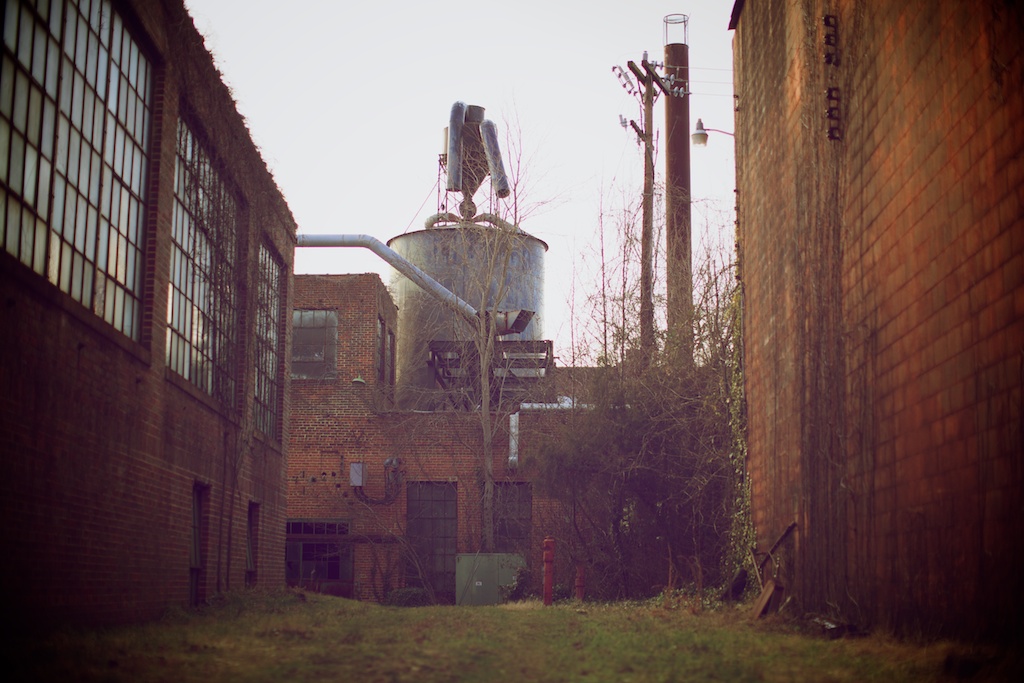
I have posted a photo from this place before, it's the White's Furniture warehouse in Mebane, NC, long defunct. Today I drove out to it, and went thru the open gate into the 'complex,' as it seems to me to be. I had sought permission to shoot here before, asking various people coming in and out of the complex for an authority to talk to (there's some sort of storage operation at one end and another set of folks park their cube trucks there overnight), but the guy they referred me to has never been there. I saw that his van was not where it would be if he was around, so today I just started taking pictures...

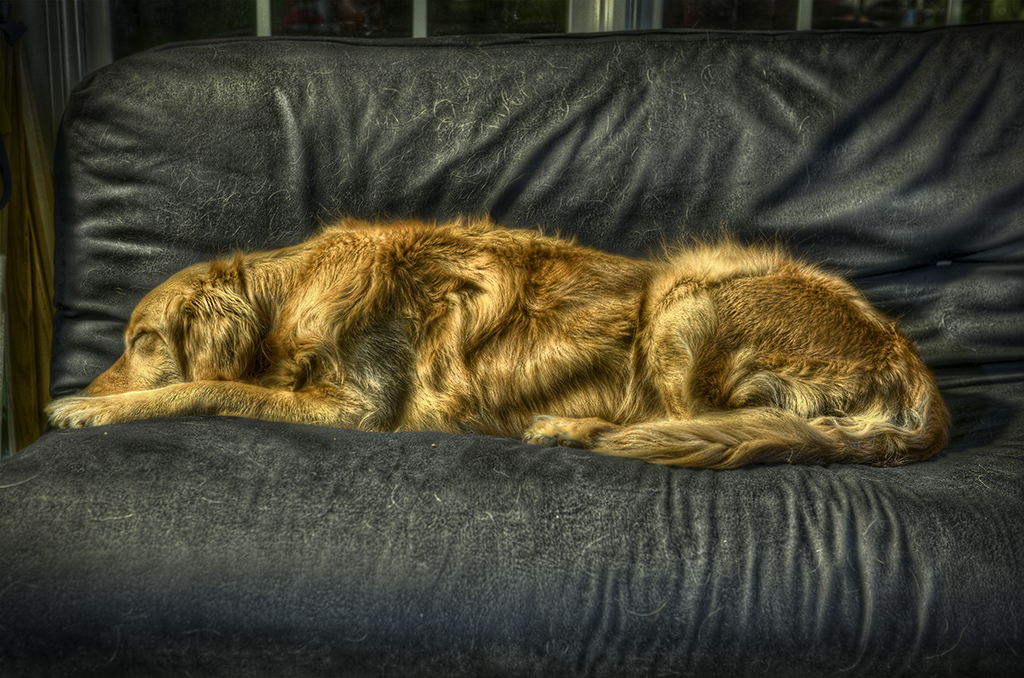
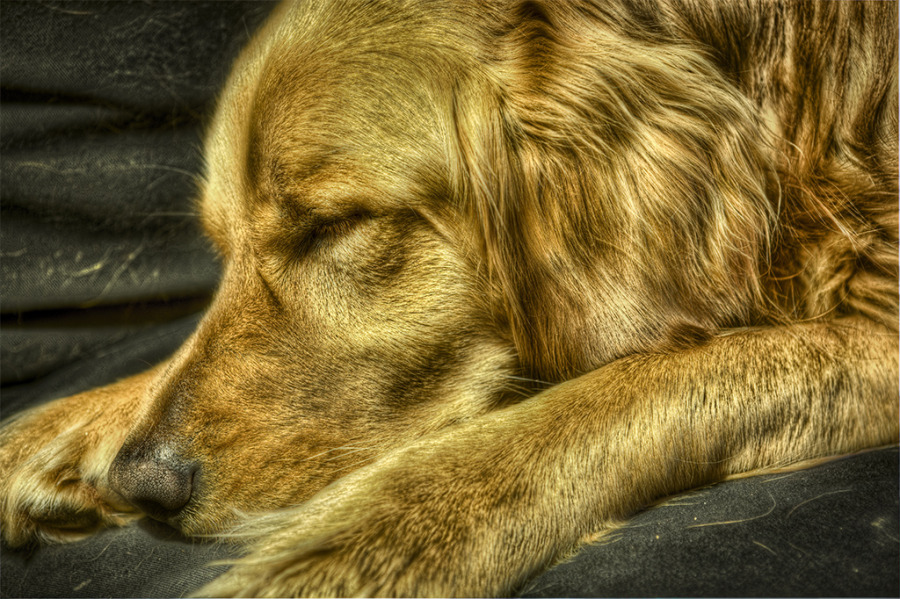
A place like this, urban decay and all, is perfect for HDR. All those textures and details...and so I decided to end my HDR-themed stint with yesterday's post. A dog (even if it IS sleeping) is a pretty unconventional HDR subject, and so I don't want to approach such an obvious subject as this warehouse with the HDR treatment. I don't quite have a distinct idea for my next theme, but I have been reading a book, The Tao of Photography, by Phillippe L. Gross and S.I. Shapiro, and I'm thinking I'll be basing my next few posts on some of the ideas I'm gleaning from it.

Mysteriously, wonderfully, I bid farewell to what goes, I greet what comes; for what comes cannot be denied, and what goes cannot be detained.Chuang-tzu

Scanning back through the book now, that quote is the best I can find that explains why I decided to quit the HDR theme when presented with such ideal subject matter. Of course, if you've been following the blog, you'll know I've been kinda sour with HDR almost since I started. Can't put my finger on it, it could be the Byzantine mire of post-production choices each shot presents itself with, it could be the disconnect between the shooting and the final image (which, when you think about it, is like the gap that comes with shooting film: a lack of instant gratification), or it could be the popularity of HDR in photo-circles (I hate pop music too, or bands that used to rock but have now been discovered - with a few exceptions)...either way, I was ready to swear off HDR with the clarity of the Informed (after all, I've given it a good run, and learned quite a bit, and got some good shots out of it). ( I wonder if I should use any more parenthesis...or ellipses...soon it'll be a poem by ee cummings.)

Then this evening I looked on my wall and realised that three of the five shots on it, shots I had taken the time to print and matte and frame, had some degree of HDR in the post-processing. So I think I'll never hang that hat up completely, it will always be in the toolkit when needed.

But back at the old warehouse, I stood by my car and made a decision. I didn't want to take my tripod, and I didn't want to approach each shot trying to imagine what it would look like tonemapped. I just wanted to walk unencumbered, with a 50mm manual focus lens, and react to this wonderful, beautifully faded place with as much of an open eye as I could. So I did. I walked around tentatively at first, not leaving sight of my car. Plenty to see even that close. I kept waiting for someone to come around the corner...and kept hearing noises that indicated someone's presence. But it was cold, and windy...and what I though was someone on the roof was just a large panel of corrugated tin flapping boisterously in the wind. I started moving further in; various garage-like structures surround the main warehouse, and together they form some interesting corridors of broken glass, broken dreams, and potentially broken ankles. A little wary of being discovered too far in without an excuse, and a little wary of what secrets a place like this could hold (I have had a true  ghost experience before), I pressed on till it sort of dead-ended in the middle somewhere, then doubled back to the car. Never saw another person.

When I got home, I processed the images in Aperture only, no Photoshop. To be sure, they aren't straight-up out-of-camera images; I processed them under the influence of some of the photographers I've been diggin' on lately, and it's something more like film. None of these really stand on their own to me, they need the others to create the sense of place. So, I've made a gallery for you to see all the selects: just click on any image to engage the gallery. I plan on going back to this place, and hopefully getting that permission to get inside as well...I could shoot here for a week I think.


-llg

55/365: Another Still Life55/365: Another Still Life

As I've said before, HDR is difficult to do correctly (multiple exposures) with any sort of moving subject. Tonight's subject did not present that problem...

Six shot sequence, tonemapped in Photomatix, then multi-RAW processed and dodged and burned and all that jazz.

-llg

54a/365: Textures on a Construction Site I54/365: Textures on a Construction Site.

Late day walk around an up-and-coming housing development in Mebane, NC. I am getting tired of the current theme, as you may have noticed from my whining, but these are pretty much straight HDR, some other post-processing to accentuate and enhance, but not much. And I like these, so go figure. Everyday is an adventure...

54b/365: Textures on a Construction Site II


54c/365: Textures on a Construction Site III

I loved these natural-looking landscape details, like this scene from Death Valley...and how each one is framed with human elements, stuff that takes it back to reality: Construction in Mebane. If I told you I took the photos with that intention, I'd be lying.

-llg

53/365: Swamp Thing53/365: Swamp Thing

A dreary day in North Carolina today. Lots of rain, and then some mist. Really beautiful, actually, in the way of dreariness. The wife and I pulled over into a 'Waterfowl Impoundment' off of Highway 54 in Durham, which is bordered on either side by swamp. An interesting location, one I plan to revisit when I have a little more time to shoot. I was able to squeeze off a few rounds of photos...

The mist was rolling around the area, and the sky was a flat grey-white. According to the Photo Rules, you want frame that kind of sky out, and concentrate on the smaller scenes rendered in soft light and saturated with color. But such a winter scene doesn't present a lot of color in a swamp, and the ambience of the area was made what it was by the big flat sky, the mirror of the swamp, and the fading tree snags in the mist. I shot the customary sequence of exposures to capture the entire scene's light range, but in such a flat, diffused light, the range from dark to light is quite compressed already. Some would say it's unnecessary to use HDR techniques for such a scene. Given my current 'assignment' I figured I had to try.

Running the software gave me the usual super-crispy detail and carmelized saturation that tonemapping can create, along with highlights and shadows that were compressed toward the middle tone. It pretty much killed the misty ambience by increasing the contrast in the areas that the mist had made flat. Again, as I'm more and more fond of doing, I used the HDR image in conjunction with another shot from the original sequence, only this time I increased the brightness of the shot to the point of blowing it out, a move inspired by my friend Alex, who sent me a sweet gallery today for inspiration. Then I masked the HDR shot so that only the middle of the frame blended slowly away to the overexposed shot on the top and bottom, giving it that misty feel again. Could I do this without the HDR processing? Probably, but not with the exact same results. Besides, even in Photoshop alone there are literally hundreds of ways to do any given processing.

So today's HDRs in themselves weren't great, but in both of these subsequent shots I used the pseudo-HDR processing on the single files and then blended them with the originals to some extent. In these examples, I used a special filter on the front of the lens, an ND filter, which blocks light to a measured degree. It allows you to use slower shutter speeds for a given scene, especially convenient when it's too bright outside to capture that sweet motion blur in a waterfall or stream. HDR hates motion though, it tends to look bad when the shot sequence doesn't line up. So using the one-shot processing gives me the detail and interesting contrast which I can then 'season' my original exposure with, as much or as little as I like, usually in areas I want to draw the eye to.

The bubbles floating by over these 30-second exposures created the streaks you see here. Like I said, I need to go back with more time, sometime.

-llg

52/365: Piano Innards52/365: Piano Innards

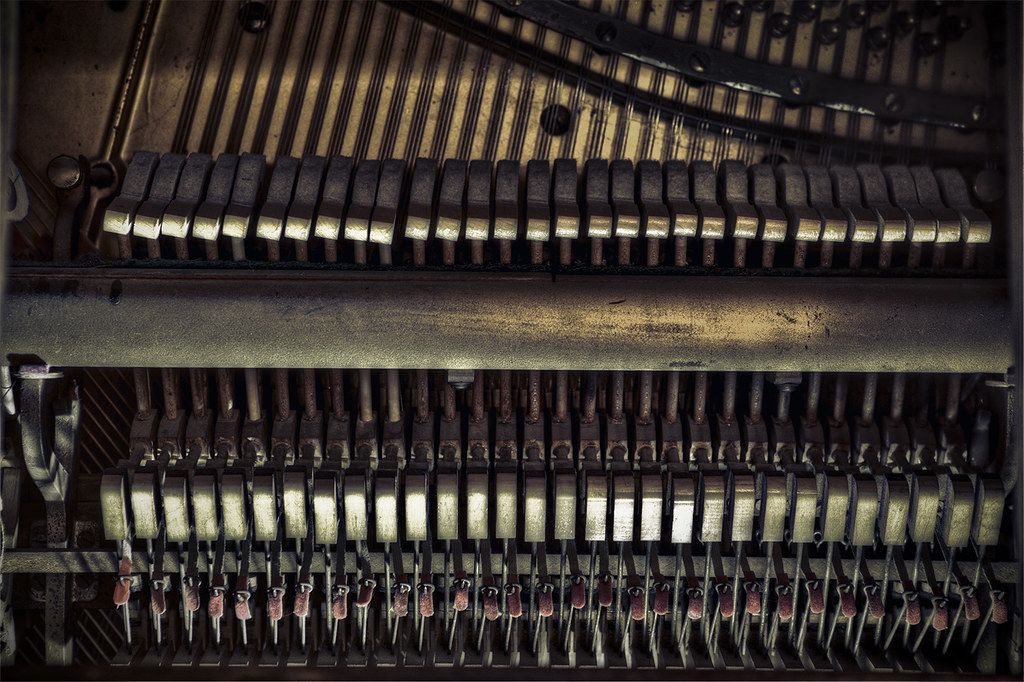
Another day where the light was gone before I got around to shooting anything. Had been thinking this could be a cool shot, so I tried it. Put a flashlight in a small plastic diffusor into my old upright piano (a gift from some friends, thanks Randy and Lara), and aimed the camera inside. As usual, the HDR processing left the image looking a little flat, but the texture was greatly enhanced, so I boosted up the contrast and dropped the saturation in Photoshop.

Thanks for the words of encouragement on yesterday's post, and all those before. It helps a lot to know you folks are out there, even if my original intention was just to get better through practice...it makes me very happy when I hear my friends and total strangers tell me they dig a photo. Not to worry, I'm in this thing for the long haul, but someday's are better than others. I think the HDR theme is a little less inspiring to me in general, because I don't get to sculpt and play with the light as much, plus the extra post-processing time is all I need, seeing that my entire day is spent in front of this screen already.

I have a list of other themes/techniques/assignments that I'd like to try out, but before I divulge said list, I'm wondering, do any of you have a suggestion for an upcoming theme? I'm open to a range of ideas, anything from the straightforward "Black and White" to something more abstract, like "Dreams."

Thanks again, hope everyone had a lovely weekend.

-llg

51/365: Fixer Upper51/365: Fixer Upper

Went for a walk in the woods first thing today... Took the camera with a 50mm lens attached and the heavy tripod, hoping that I'd find something good to give the old HDR treatment to. As the walk went on, and the dog went wild, and I got more and more tired (no coffee at this point yet), I began to question why I was doing this stupid 365 project in the first place. I hated HDR, there's no way to take a good HDR photo in the wintery woods, everything will just come out too detailed and there will be no focal point, and it all looks the same, but of course that's cause I suck and shouldn't ever have taken on this idea, it's so stupid, oh why did I start this stupid blog, now I'm just pumping out a daily supply of mediocrity and tripe and no one gives a fark and today will be even WORSE and I need coffee something fierce or I may pass out in these leaves...

I took a couple images of some shelf fungi, nothing amazing at all, but enough to make me feel satisfied with having taken the whole rig 3 miles into the woods. We walked back, and crossed the last broken bridge by the swamp near out house. As my wife put the dog on the leash, I noticed the old bicycle in the shallows. I see it every time. This time, it turned out to be a photograph. Made it all worth it, even If I didn't really have to walk for an hour to find it.

-llg

50/365: Out of Gas50/365: Out of Gas

There's an old auto repair garage right on I-40 near my house. I don't know how long it's been out of commission, but it looks like a long damn time. I love the building, it sits on a hill overlooking the exit ramps and the highway, and I often dream of what it would be like to convert it into a studio. Then I went in it, and the idea of a conversion fell through the multiple cracks in the wall, the kind that spilt cinder block walls along their mortar seams, and even right through the blocks. The kind that a sinking foundation causes.

Well, it still makes for interesting photos. I shot this round of photos (www.doublelgphotos.squarespace.com) sometime last year. The top shot shot was very rich with texture and detail, as HDR can be, but I wanted a tilt/shift treatment for a dreamy feel, so it's been processed quite a bit. Here's some other favorites from the day.

Here's to 50 days down!

-llg

49/365: BONZAI!49/365: BONZAI!

Shot a job today using almost every strobe in the arsenal, in two separate setups in two different rooms. Hours of setup for 15 minutes of actual shooting. Went well though. Very Zen.

On the way home, my friend Krista saw this Bonzai stand on the side of road and said, "That should be your picture today." Damn straight.

Doing HDR with a telephoto lens is tough, even with a good tripod. At 400mm the camera shakes a lot, and it can be tough for the exposures to line up in the process. The image stabilizer makes it worse , as the lens element jumps over to a random side and though the shot is very crisp, it's even more out of alignment  from frame to frame. The software attempts to correct for this, but I'm not impressed with it's ability.

The solution? Shoot a lot of frames, and hope for the best. Or as some of us say, "Spray and Pray."

I wanted this to look like a nice white backdrop shot, so I used the van that was parked behind to isolate the plants. I was tired though, and didn't feel like working my angle much to isolate it properly. I was trusting that I could get a good crop, but now I can't find one that works well. I COULD photoshop out the backside van on the left side of the picture, and if anyone wants to to buy a print of this one and pay me by the hour to do that, I'll be happy to. For now, real hours must be put to a real client ;)

-llg

48/365: Squash Portrait48/365: Squash Portrait.

As I'm growing tired of the HDR process, I'm starting to cheat on the 365 blog theme of HDR... Tonight I used the bastardized Pseudo-HDR process from one RAW file, combined with some strobes, to generate a weird tonemapped picture, which I then combined with the original exposure using masks and blending modes, to create this stylized self-portrait.

Here's what the original and the subsequent HDR looked like before combining them. Noticed that I made the psuedo-HDR a black and white; this helped keep the color more natural in the blending process and the overall noise down as well.

As on some of my other posts, I was not trying to get a single treatment that looked good in all areas. I was going for the texture effect in the areas that mattered, my face and beard, and the shirt and squash to some degree.

As you can see, the process generated some ugly halos around the contrast edges in the photo, and the imperfections in the wall have been accentuated. So in Photoshop, I just masked out those areas, concentrating on the face. I also cropped out most of the light switch and then clone stamped the rest of it out, along with the ugly spots on the wall.

Oh, and the acorn squash? I hate taking my self-portrait without something to make it more interesting. So I take a cue from Dali sometimes: when in doubt, throw things in the air.

What, you wanna see another picture of me? Well, I'm blushing. Okay, here, just for you. Oh stop it, I could never have modeled. Oh, for 'Terrorist Monthly.' Ah, yes. They have called a few times.

-llg


47/365: White's Furniture47/365: White's Furniture

Another thing that HDR does very well is texture. Decaying things, rusting things, metal and wooden things, all get nice and textural, and textury-looking. On the way to the grocery store for Chimay and other effects for the evening's dinner, I stopped at the decrepit White's Furniture building in Mebane, once a fully-functioning American factory, now nothing at all. They plan on making apartments out of the building, but before they do, I need to get in there and shoot the hell out of it in all it's composting glory.

The furniture warhouse sits right in the middle of downtown Mebane, NC. The railroad tracks run right past, but the trains don't stop here anymore.

 The factory was locally-owned for something like 100 years, but in the 1990's it was bought by a large corporation, and then went out of business not too long after. A local photographer (he lives a block away from the warehouse), Bill Bamberger, documented the swan song of the building in a great book, Closing, co-authored with Cathy N. Davidson. The book provides a lot of insight into what the closing of such a place, the main economic heart of such a town, can do to the people and area (here's a hint, it ain't a good thing).

As I left the railroad tracks I was shooting on, I found a small treasure. Rusty, but pretty. Kinda like the old warehouse. I'm a sucker for old, dead stuff...

-LLG

46/365:  Barn in a State of Decay

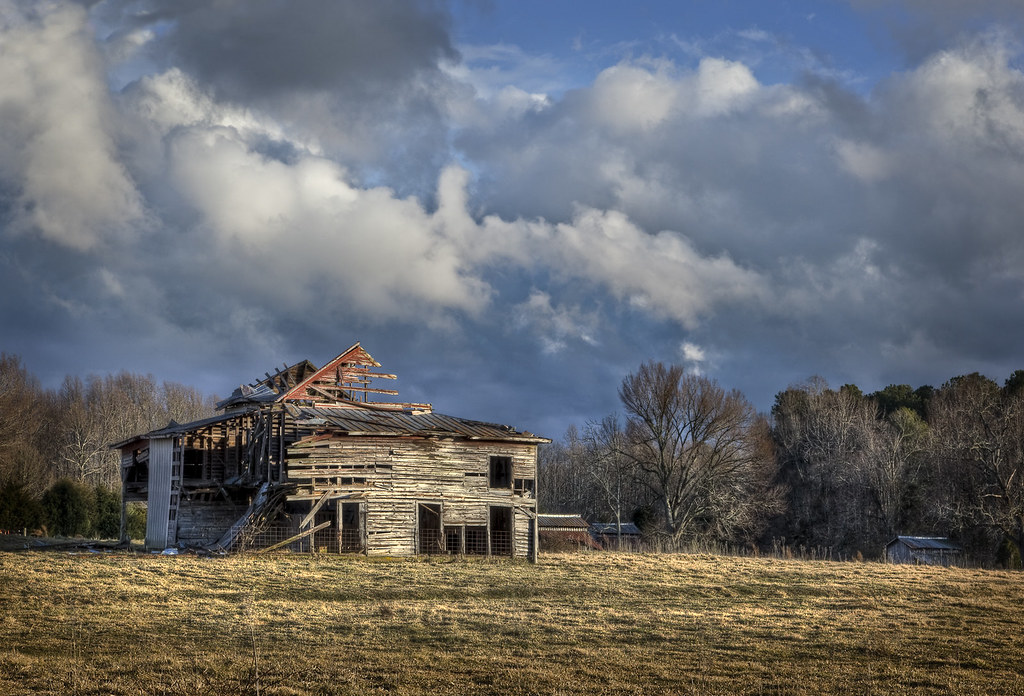
Weather was rainy all day, then it began to clear as the sun swept toward the horizon. I hopped in the car and listened to the day's events on NPR as I tried to get myself lost in the country. Before I could get lost, I stopped at a spot I've shot several times before, at night, and in various states of weather. This is a new angle on an old barn.

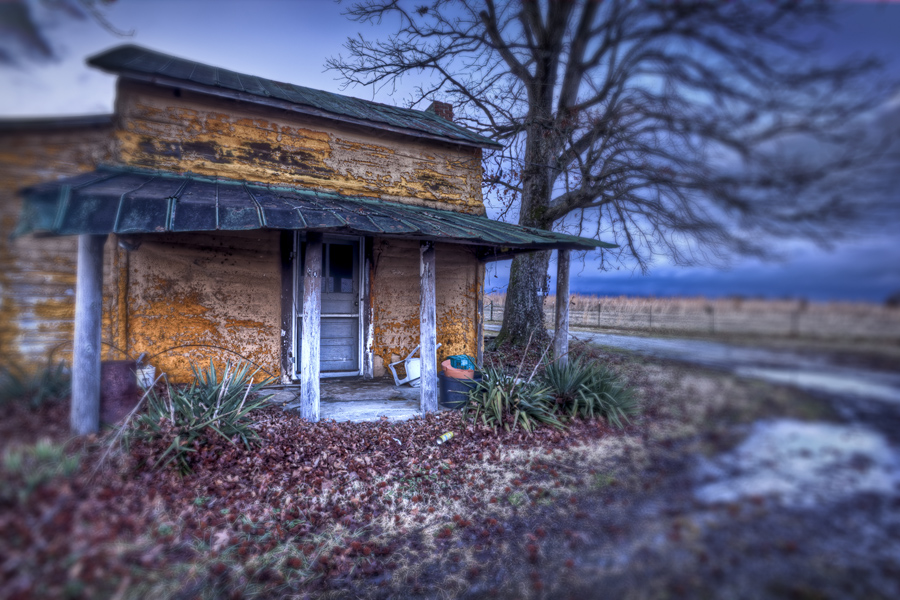
I may run the risk of shooting only bad weather in the countryside around my area, because of how good it looks in HDR, but I'll try to spice it up too, I promise. Here's the thing. Not even a full week in, and I'm already feeling HDR'ed out. Having to do this type of shooting, or rather, this type of post-processing is both a major time-drain and leaves me feeling unfulfilled to some degree. In my Strobist month, I spent most of the considerable time in the setups and blog posts, but now I'm spending a lot more time in the image processing stage, which is good for practice, but it feels more hollow than nailing the exposure in the camera and tweaking it just a bit afterward. The benefit is that I'm learning more about what kind of photographer I really am, which is important, since I've always wanted to shoot just about EVERYTHING, and have refused to put myself into any sort of genre box. A little direction helps. Also, I'm learning how the HDR process can add to broader topics that I do plan on spending more time with, like landscape photography in general, and also black and white.

Today's shot is all alone, even though I got a few keepers from the drive. I want to save them for another day when I need backups.

Again, I resorted to a blended method of processing. The initial HDR looked good in the lower foreground, but the clouds were moving so fast that the software couldn't reconcile the movement between the frames, even though they were shot within seconds of each other. This one is HDR processed in the lower half, but combined with one of the metered exposures in the top half to capture the clouds without movement.

Ok, one more, what the hell.

-llg

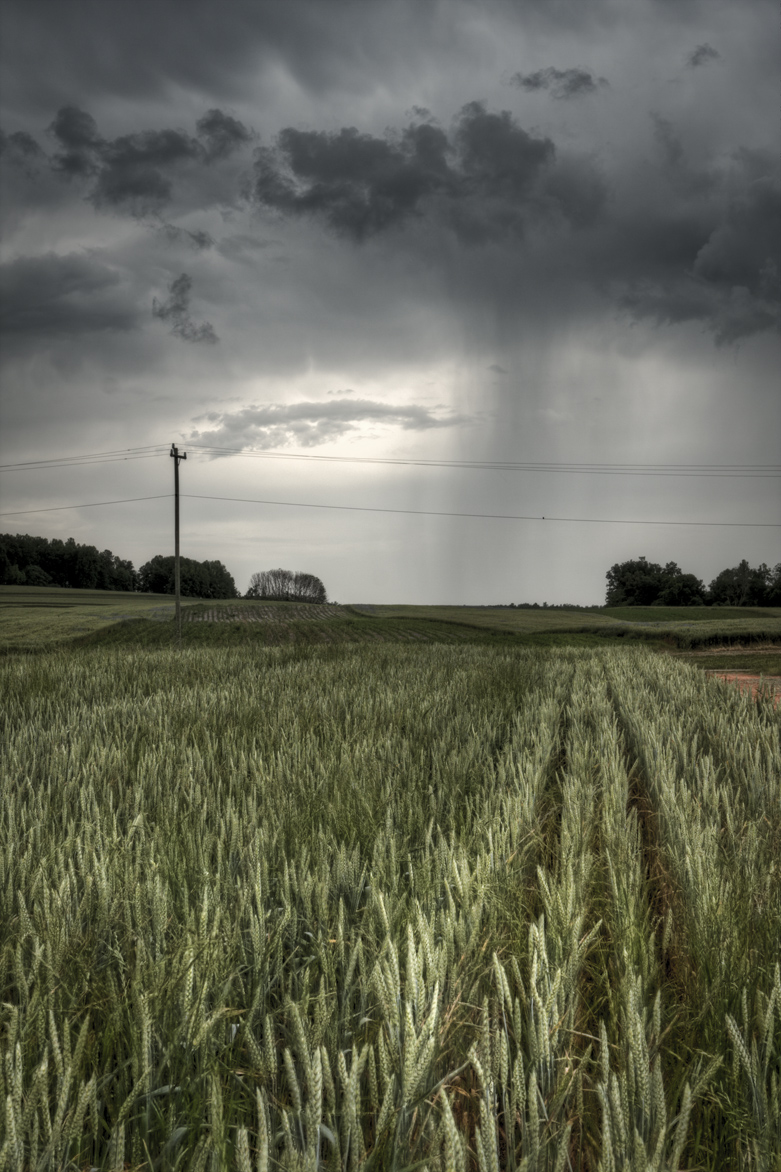
45/365: Thy Cleansing Cometh

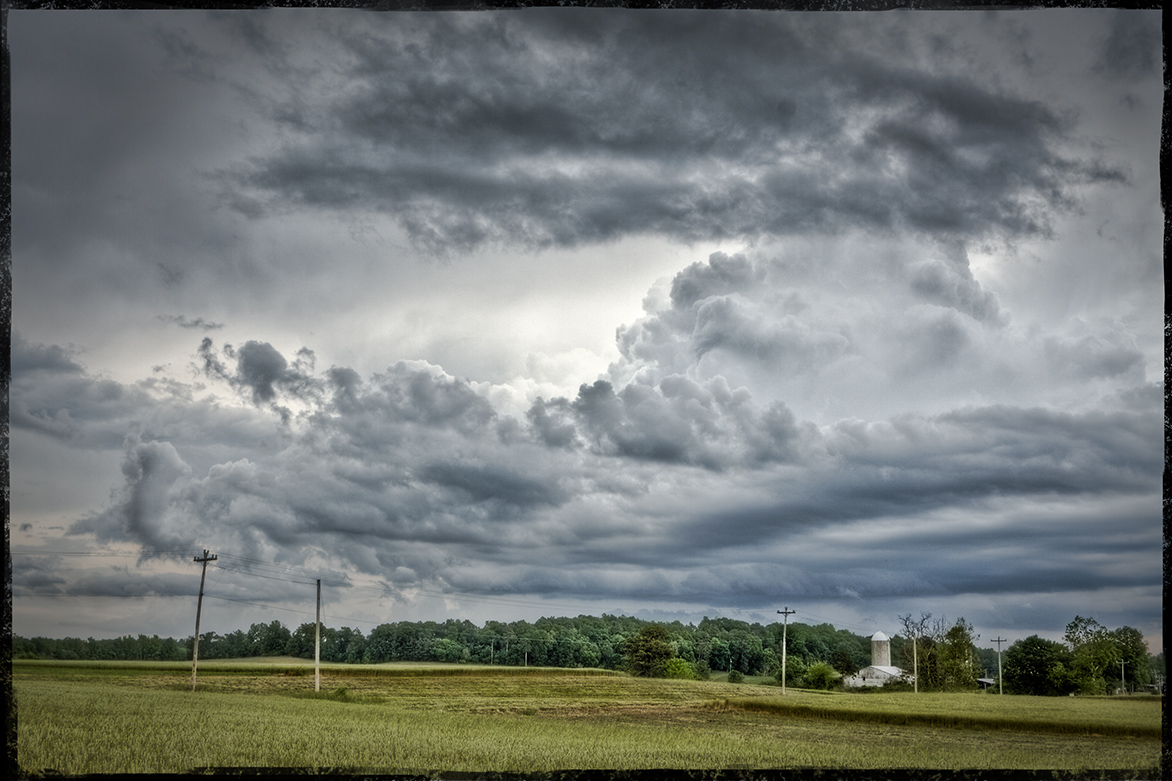
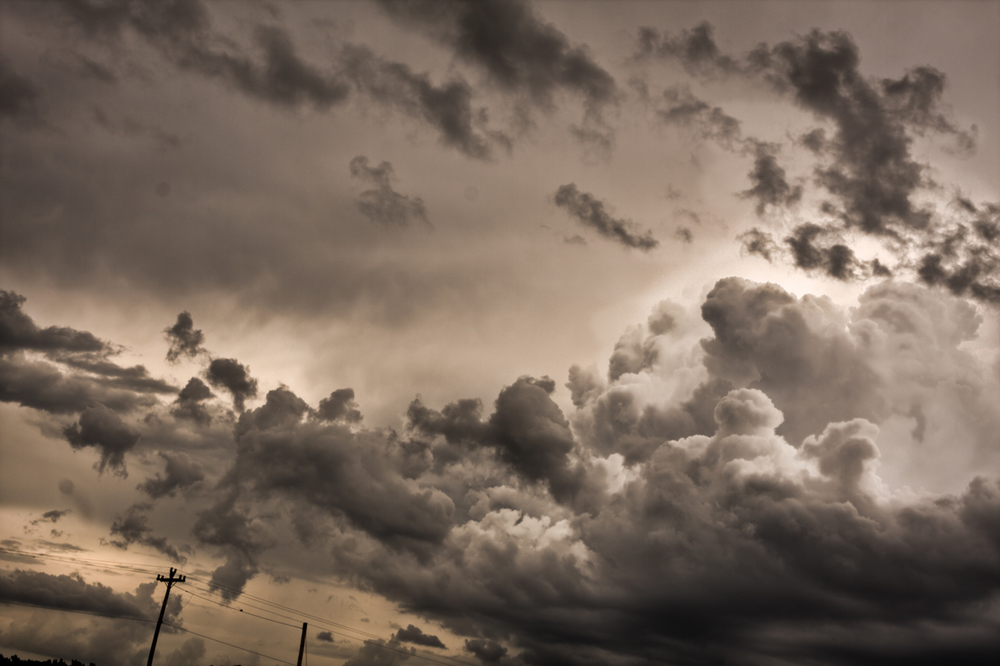
 One thing that HDR does well, for me, is weather. This is one reason I think Ansel Adams would have embraced the technology and taken it even further than the best do today. Indeed, his Zone System of exposure has some similarities to HDR in intention...

Today's shot's are all archival, most shot at the same time, on a drive home from Chapel Hill last May. I have lots of old shots that have fallen through the cracks, and I'm glad I have days that I don't get a chance to shoot now, so I can go back and edit them.

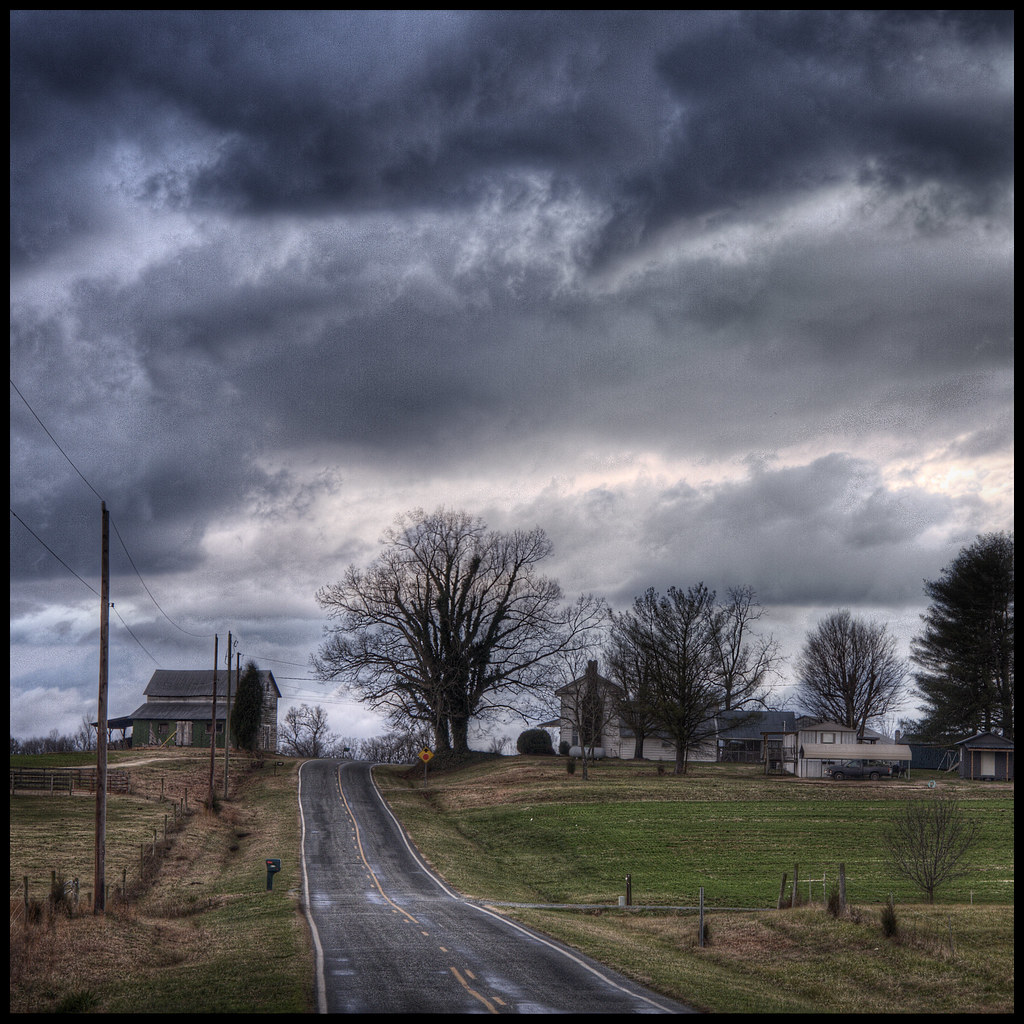
And on a different day altogether, I snapped my favorite stormy weather picture ever, also processed using HDR:

Country Road

-llg

44/365: Let's Go to the Movies44/365: Let's Go to the Movies

The day got away from me. Drove out to the country to find some shots, but never got anything worth a hoot...

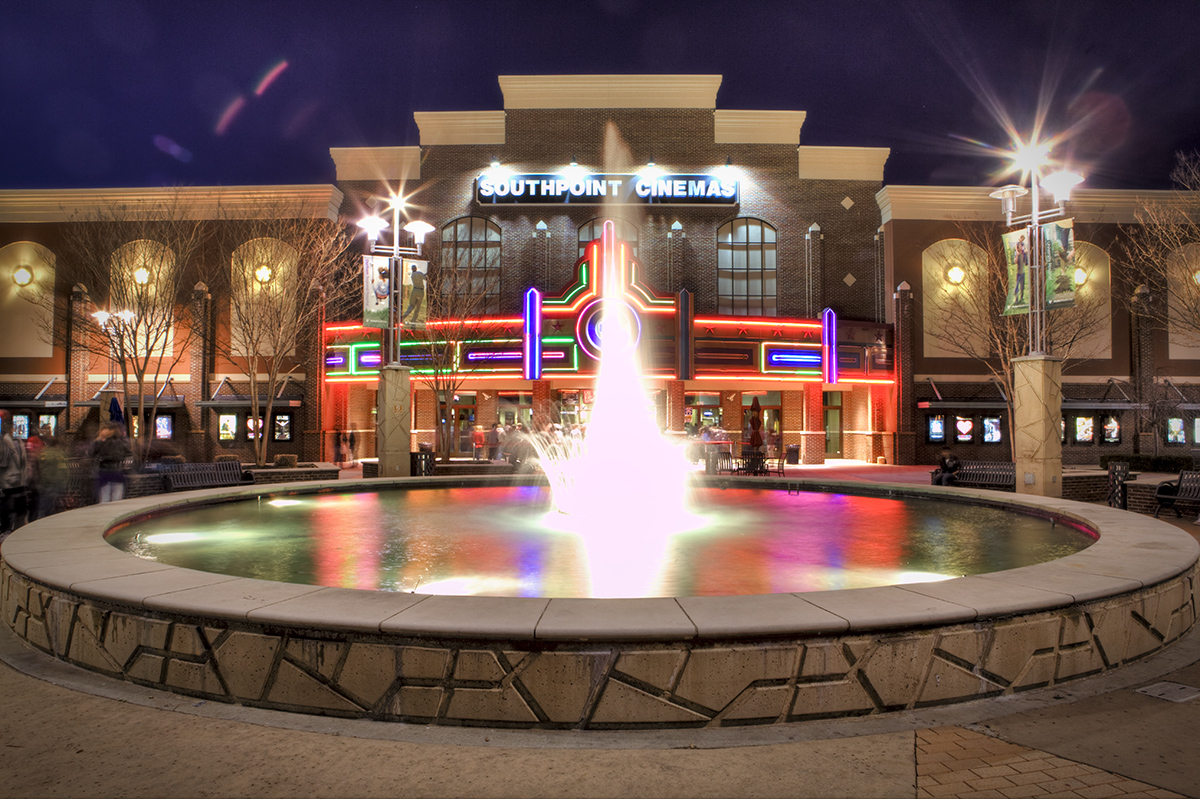
Next thing you know, it's getting dark and we are going to the movies. Grabbed the tripod and camera, and got about 3 shots off before a Mall Cop told me I couldn't take anymore. Maybe it's because I have a terrorist's beard...hides the kind face. This image is a single RAW shot that has been converted to a pseudo-HDR. When you shoot in RAW mode, the camera puts all the information it can into the file and keeps it there for you to manipulate later, at which point you have to discard some of the color and exposure information and turn the file into something that computers universally recognize, like a JPEG. But a RAW file has a lot of information in it, and so can be run thru the HDR software to create a fake HDR image, using the shadows and highlights from just the one file. It's not a real HDR image, but it kinda looks like one because of the tonemapping process.

-llg

43/365: Last shot of the Day43/365: Last Shot of the Day

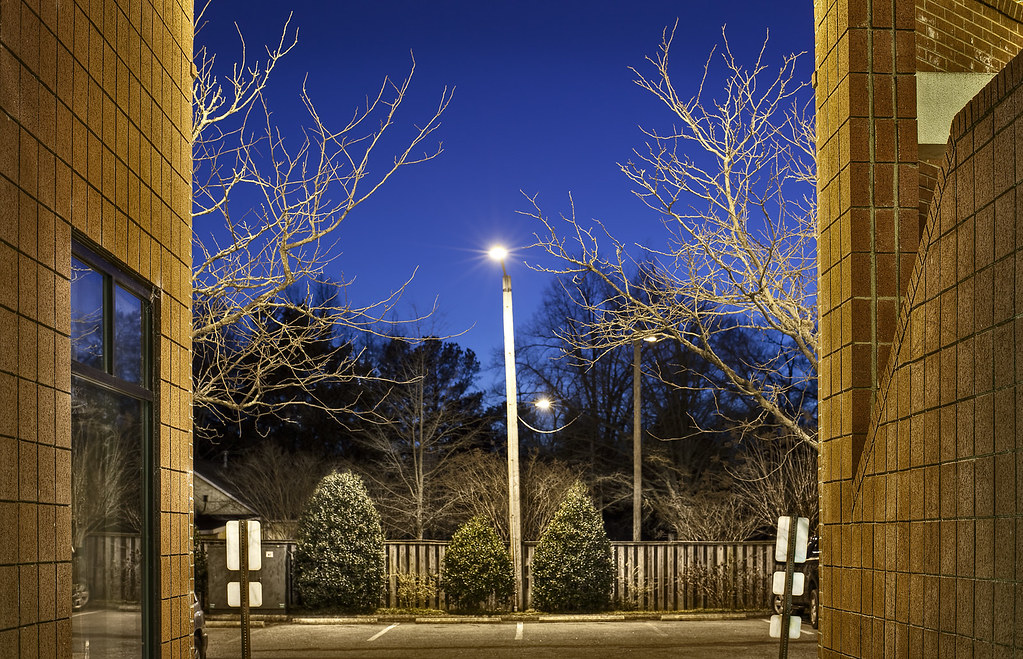
It's always in the last place you look. After walking around for an hour yesterday, shooting a few good shots here and there, this is the last shot I get before I reach my car...

Really, I didn't need to use any HDR for this shot. It looked great straight out of the camera: it was that time of day when the sky is deep blue, and the stars are just beginning to put on their makeup. The light from the sky balances with the artificial light sources in the parking lot, and the warmth of the tungsten blubs contrasts nicely with the blue. But feeding the sequence into the HDR machine created both delights and problems. The walls, bushes and parking lot took on great texture and interesting contrast, but the sky and the area around the street light looked horrible, very oversaturated and fringy in contrast. The smooth blue sky was now a weird series of tones and the highlight of the street lamp was no longer a highlight. This is a common problem with HDR tonemapping.

So I did what I often do with HDRs. I ran the nasty tonemapping and only paid attention to the areas I liked, then combined that image with one of my original images in Photoshop. Basically you stack the two images, one over the other, then paint away the areas you don't want to keep, or do want to keep, depending on which image is on top. In this case I painted in the areas I liked from the HDR: the textured walls, the parking lot, and the bushes below the light. The trees and the sky I kept from the original exposure. This is , in my opinion, an example of a soft-handed approach to the whole HDR thing: it's not very obvious that it actually is HDR, although there's some areas in the shot that do give it away.

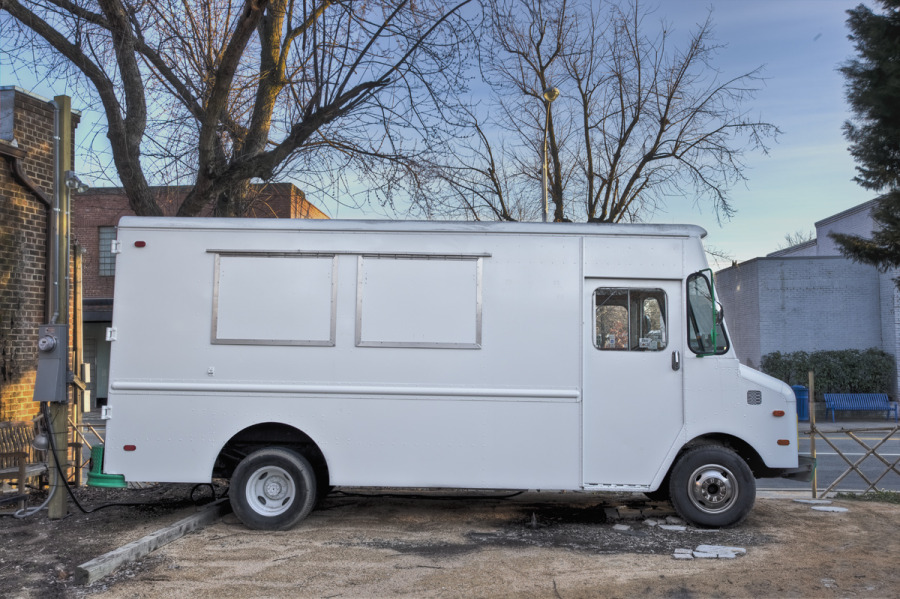
I will often use this approach to fix the areas that HDR tonemapping just doesn't get right for me. In this example, the delivery truck looked too dark in the tonemapped image (Which makes sense, even though it's white. Remember, HDR takes the lightest values in an images and brings them down closer to a middle tone). So I combined the tonemapped version with one of the brighter shots in the sequence, again masking out the truck in the HDR and using the 'normal' shot underneath.

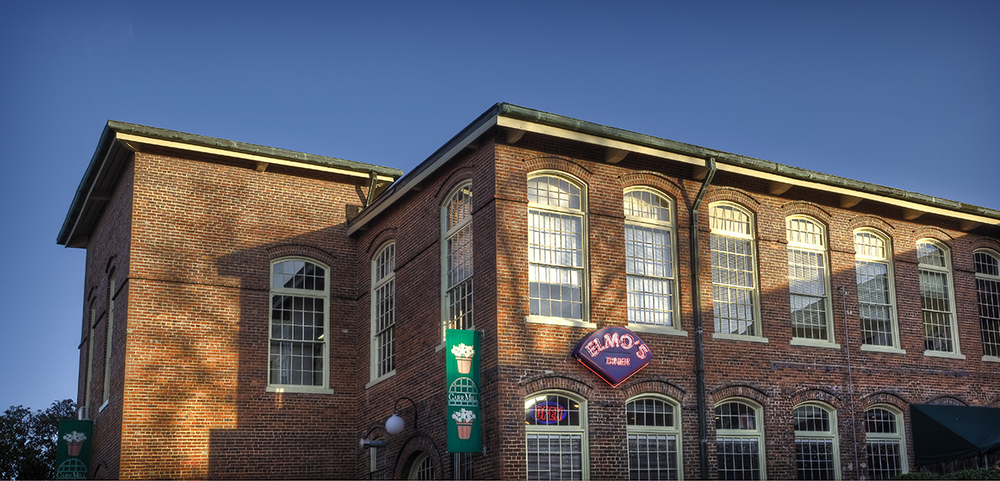
And in this shot of Elmo's Diner, I liked the HDR treatment of the building, but the sky was unnecessarily grainy and noisy, another side effect of the process. So I used the sky from one of the original shots.

I will admit that most of time, I gravitate to these more subtle approaches to HDR. But that doesn't mean that the heavy-handed, obviously-processed approach is any less valid. It's all a matter of personal preference. I'll try some with that approach soon I think.

What do you think of these images? Good, bad, interesting, boring? Sound out in the comments.

Happy Friday to all,

-llg

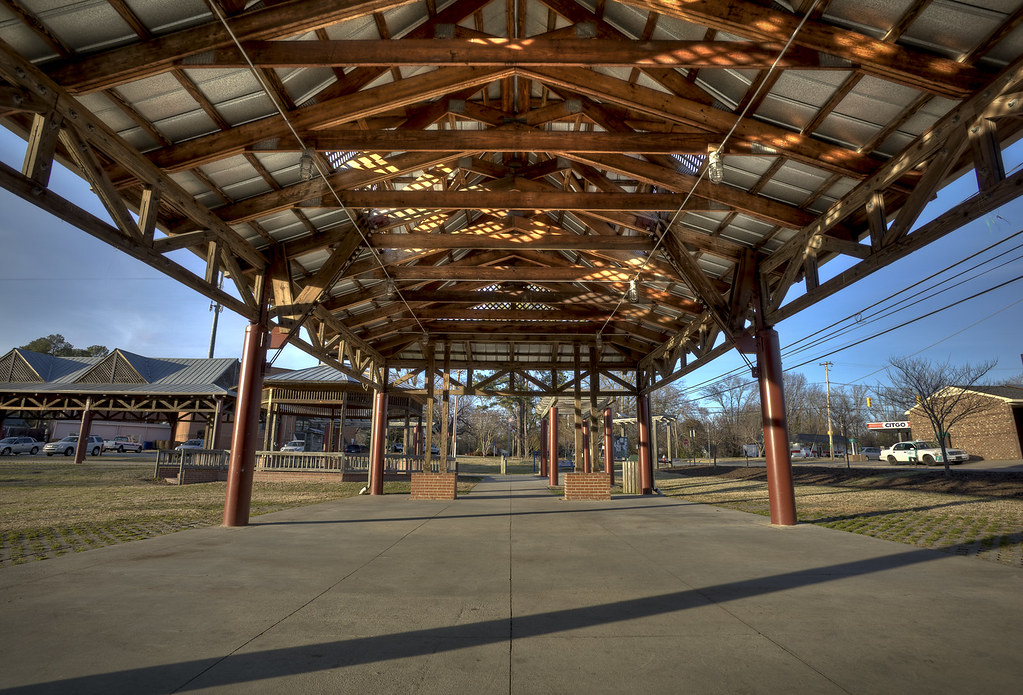
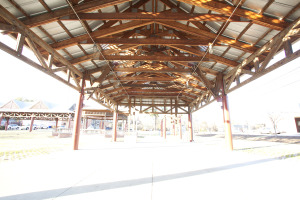
42/365: Empty Market42/365: Empty Market, Carrboro, NC

For better or for worse, I'm done with my mandatory 'Strobist' theme here on the blog, and I'm starting my next theme, which will be High Dynamic Range Images, aka HDR...

Some of you may know what HDR is, and may even have an opinion on it. I'd venture that every photographer that's reading this has an opinion on HDR, perhaps a strong one. For the uninitiated, here's a quick breakdown:
Photography in general can only capture approximations of what we see. There's more than a dozen ways to expound on that statement, but what we are concerned here with is the fact that film and digital sensors can only 'see' a restricted range of light within a certain given scene, whereas our own eyes can see more of the light in the same scene. Let's say you are under a porch, looking out at noon on a sunny day. Your eyes can see in the shade just fine, and you can also see everything outside of the porch in the full sunlight. Well, cameras can't really. If you tried to take a picture that included the shaded areas and the fully lit areas, the camera won't be able to get both in detail. If you choose to expose for the shade, the light areas will 'blow out' and be over exposed. If you expose for the sunny areas, the shady areas in your shot will go black. Somewhere in the middle sometimes works, but usually either extreme is still too extreme and then neither area looks good.

When you create an HDR image, you take multiple exposures of the scene and try to capture the entire range of light, from the darkest areas to the brightest. It's best to have the camera on a tripod so each exposure lines up with the next, and it gets complicated when objects move between shots, so the technique is only applicable to certain subjects (these rules aren't fixed, and we'll get to that eventually). You start at the darkest exposure that can just capture the brightest areas in your shot, then increase your exposure in increments until you take the brightest exposure that can capture the darkest areas. Like this:
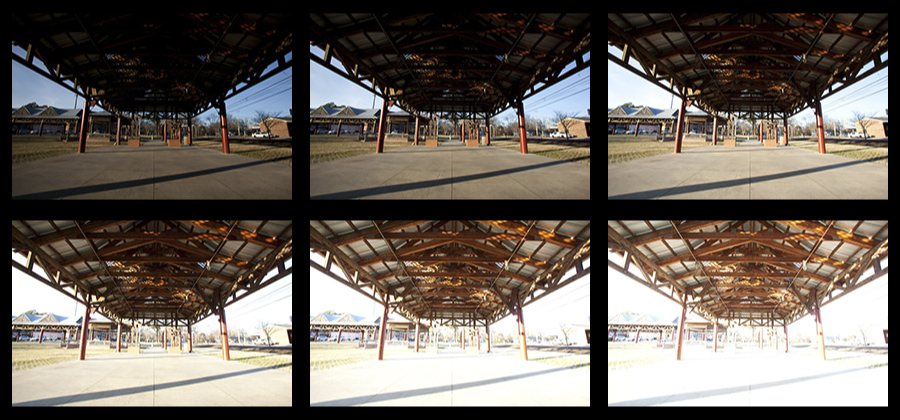
It gets even dorkier after that. This is a software-intensive technique: it requires special programs that can take all the shots and merge them based on complicated algorithms and wizardry of the highest sort. And not just Photoshop, Max, in fact, PS does a shitty job for the most part with this stage in the process. The  most common program, and the one I use, is Photomatix, but it's not the only one, and it may not be the best in all situations. The program does its math and what-not, and you get a true High Dynamic Range image. It captures the range that your eye can see and maybe more. In fact, it captures more than your monitor can display: that's right, our screens, and even photo paper, can't actually display the full range of light that our eyes can see, and the HDR image contains. So then, you have to use the programs to 'tonemap' the image, which basically takes all that information and compresses the tones into a lower dynamic range that you can see on a screen, or print on paper...this may sound like we're going backwards, but not really. The new image now has visible information in all the areas that it previously couldn't get in the same exposure. The shadows are still shadows, but they are brighter than black and have detail. The highlights are still highlights, but they are just short of detailess white. Now the image can go over to Photoshop for more editing, if needed.

The tonemapping process is what gives HDRs a certain look, and can result in images that look very strange in some cases. Notice I didn't say good or bad. In the process, you can go from anywhere between heavy-handed, which results in hyper-colorful/contrasty/textury images, to subtle, which may not even look much different that a standard photograph. Here's the thing about HDR, for those of you who don't know: it's a hot button issue with some dorks photographers. They love it or hate it. Or, they love one approach, the subtle one, and hate the extreme treatment. The common argument goes like this: HDR, when done in a subtle fashion, captures a scene more like how our eye sees the scene (in the way I mentioned earlier), but when tonemapped in a less subtle way, becomes ugly, unreal, garish, and 'Harry Potter-like' to quote one proponent of this argument.

I have a problem with this take. It's the part about how our eyes see the scene. Anytime I watch someone doing a tutorial on HDR and they say, "This is more like how my eye saw the scene," I think, 'No, it's not.' It just makes it more like a traditional photograph. I'm sorry, but increasing the available detail and dynamic range of a photo may make it closer to how the human eye works in theory, but there's so many other things that make our vision one thing and a photograph something else entirely. Our vision is stereoscopic, rife with blind spots that our brain fills in, blurry except for one tiny point, tunneled, peripheral. In short, subjective. A photo is a record and representation of light, and if I may skip over all the journeys between that definition and this one, it's a piece of art. And so in my opinion, the artist is free to do whatever they care to do with the image, subtle or not. The problem may be that there are lots of people making bad imagery with HDR, but the same can be said of photography in general. And of course, 'bad' is subjective. I think one point that has been made here on the blog by my friend James Ball is valid: a lot of HDR imagery can be lacking in contrast, since all the tones have been compressed so much closer together, and so the eye can't find a point to really be attracted to. But that's a hallmark of many a bad image, and HDR is only a factor in the final flatness with which the image falls.

I'm rambling on, but I'll continue this debate as I work thru this theme. I'm not going to pass judgement on HDR in general yet, but I'd like to spend a significant time with the technique and try the extremes in order to see what's possible, to get better at it, and to see what your reaction to the images is. After all, it could just be garbage in the end...
-llg

41/365: The Strip41/365: Water on the Strip

Hoping to get some night shots on our last evening in Vegas, Joe and I ventured out. It was only drizzling at the time, but we had dinner reservations at Tom Keller's Bouchon, so I was only able to get a couple good shots as we hustled down the Strip to the Venetian...

As you may know, my friend Joe here writes his own blog, Taste On Tour. The dinner was very good, and will be featured in one of his upcoming posts. You'll get to see more pics of the tastiness then.

Well, after dinner, the rain was really pouring. I wanted to grab some more shots, but instead we grabbed a cab and headed back to meet up with our crew and watch more money disappear in the magic game of 'Shits' or 'Poops' or whatever it's called. Didn't even click the shutter today during the travels home. But it's good to be back, I will say. Goodnight all.

-llg